What Are the 4 Stages of Rehabilitation?
Rehabilitation is a structured, step-by-step recovery process designed to help patients regain movement, strength, balance, and confidence after injury or surgery. Whether the injury is sports-related, post-surgical, or due to overuse, successful recovery depends on following the four stages of rehabilitation in the correct order.
Each phase has a specific goal, and skipping or rushing a stage can increase the risk of re-injury. Evidence-based physiotherapy focuses on progressing safely through these stages under professional guidance.
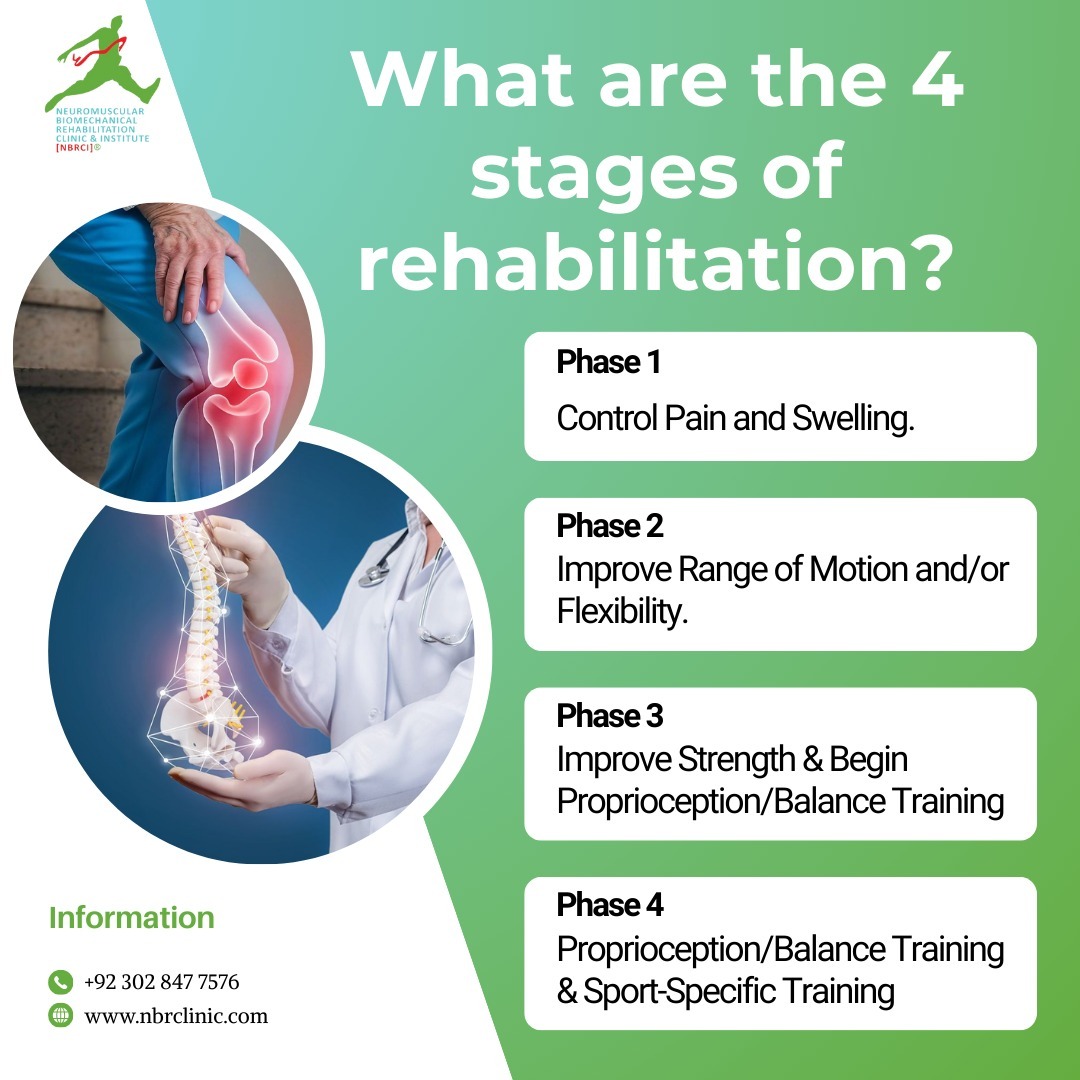
Phase 1: Control Pain and Swelling
The first stage of rehabilitation focuses on reducing pain, swelling, and inflammation, which are common immediately after injury or surgery. This phase is also known as the acute or protection phase.
Uncontrolled swelling can delay healing and restrict movement, so early management is essential. At this stage, the goal is not aggressive exercise but protecting the injured tissue and allowing the body’s natural healing process to begin.
Key Focus Areas:
- Pain management techniques
- Swelling and inflammation control
- Tissue protection and rest
- Maintaining gentle movement without stress
Common Interventions:
- Ice therapy, compression, and elevation
- Manual therapy by a certified physiotherapist
- Gentle isometric exercises
- Education on activity modification
This phase sets the foundation for all later rehabilitation stages. Proper pain and swelling control helps prevent stiffness and promotes faster recovery.
Phase 2: Improve Range of Motion and Flexibility
Once pain and swelling are under control, rehabilitation moves into the mobility and flexibility phase. Injuries often cause stiffness, muscle tightness, and joint restriction, which must be addressed before strengthening can begin.
The objective here is to restore normal movement patterns and improve joint mobility without causing irritation or pain.
Key Focus Areas:
- Restoring joint range of motion
- Improving muscle flexibility
- Reducing stiffness and tightness
- Encouraging controlled movement
Common Interventions:
- Active and passive range-of-motion exercises
- Stretching programs tailored to the injury
- Soft tissue mobilization
- Posture and movement correction
This stage is essential for ensuring that the body can move efficiently and safely before load and resistance are introduced.
Phase 3: Improve Strength & Begin Proprioception / Balance Training
After mobility improves, rehabilitation progresses into the strengthening and neuromuscular control phase. At this stage, muscles, tendons, and ligaments are gradually exposed to controlled loading.
A major focus of this phase is proprioception, which is the body’s ability to sense joint position and movement. Injury often disrupts this system, increasing the risk of instability and future injury.
Key Focus Areas:
- Muscle strength development
- Neuromuscular control
- Balance and coordination training
- Core stability
Common Interventions:
- Progressive resistance exercises
- Closed-chain functional movements
- Balance and stability drills
- Controlled weight-bearing activities
This phase prepares the body for functional movements required in daily life and sport by improving strength and movement awareness.
Phase 4: Proprioception, Balance & Sport-Specific Training
The final stage of rehabilitation focuses on advanced functional training and sport-specific movements. This phase bridges the gap between clinical rehabilitation and real-world performance.
The goal is to ensure the patient can safely return to work, daily activities, or sports with confidence and reduced injury risk.
Key Focus Areas:
- Advanced balance and agility training
- Sport-specific or activity-specific movements
- Reaction time and coordination
- Injury prevention strategies
Common Interventions:
- Agility drills and plyometric exercises
- Direction-change and speed training
- Sport-specific movement patterns
- Return-to-play assessments
Completion of this phase indicates readiness for safe return to activity, but ongoing conditioning and prevention strategies are strongly recommended.
Why Following All 4 Rehabilitation Stages Matters
Skipping or rushing rehabilitation phases can lead to:
- Recurrent injuries
- Chronic pain and instability
- Poor performance and delayed recovery
A physiotherapist-guided rehabilitation program, based on evidence-based protocols, ensures each phase is completed safely and effectively.
How Long Does Each Rehabilitation Phase Take?
Rehabilitation timelines vary depending on:
- Type and severity of injury
- Individual healing response
- Age and activity level
- Compliance with therapy
Some patients may progress through phases in weeks, while others may require several months. Personalized rehabilitation planning ensures optimal outcomes.
Final Thoughts
The 4 stages of rehabilitation provide a structured and scientifically proven pathway to recovery. From pain control to sport-specific training, each phase plays a vital role in restoring function, preventing re-injury, and ensuring long-term success.
Working with a certified physiotherapist ensures that rehabilitation is safe, progressive, and tailored to individual
✅ FAQ Section (SEO + Featured Snippet Friendly)
❓ What are the 4 stages of rehabilitation?
The four stages of rehabilitation include controlling pain and swelling, restoring range of motion and flexibility, improving strength with balance training, and progressing to sport-specific or functional training. These stages ensure safe and complete recovery.
❓ Why is pain and swelling control important in rehabilitation?
Pain and swelling control is crucial because inflammation can restrict movement, delay healing, and increase the risk of long-term stiffness. Proper management in the early phase creates a strong foundation for later rehabilitation stages.
❓ When does strength training begin in rehabilitation?
Strength training usually begins in Phase 3, once pain is controlled and range of motion is restored. This phase focuses on muscle strengthening, balance, and proprioception to rebuild stability and function.
❓ What is proprioception in physiotherapy?
Proprioception refers to the body’s ability to sense joint position and movement. It is essential for balance, coordination, and injury prevention and is a key focus in later stages of rehabilitation.
❓ How long does the rehabilitation process take?
The duration of rehabilitation depends on injury severity, healing capacity, and patient compliance. Some recover in weeks, while others may require several months under professional supervision.