Understanding the Most Serious Causes of Back Pain: A Comprehensive Guide
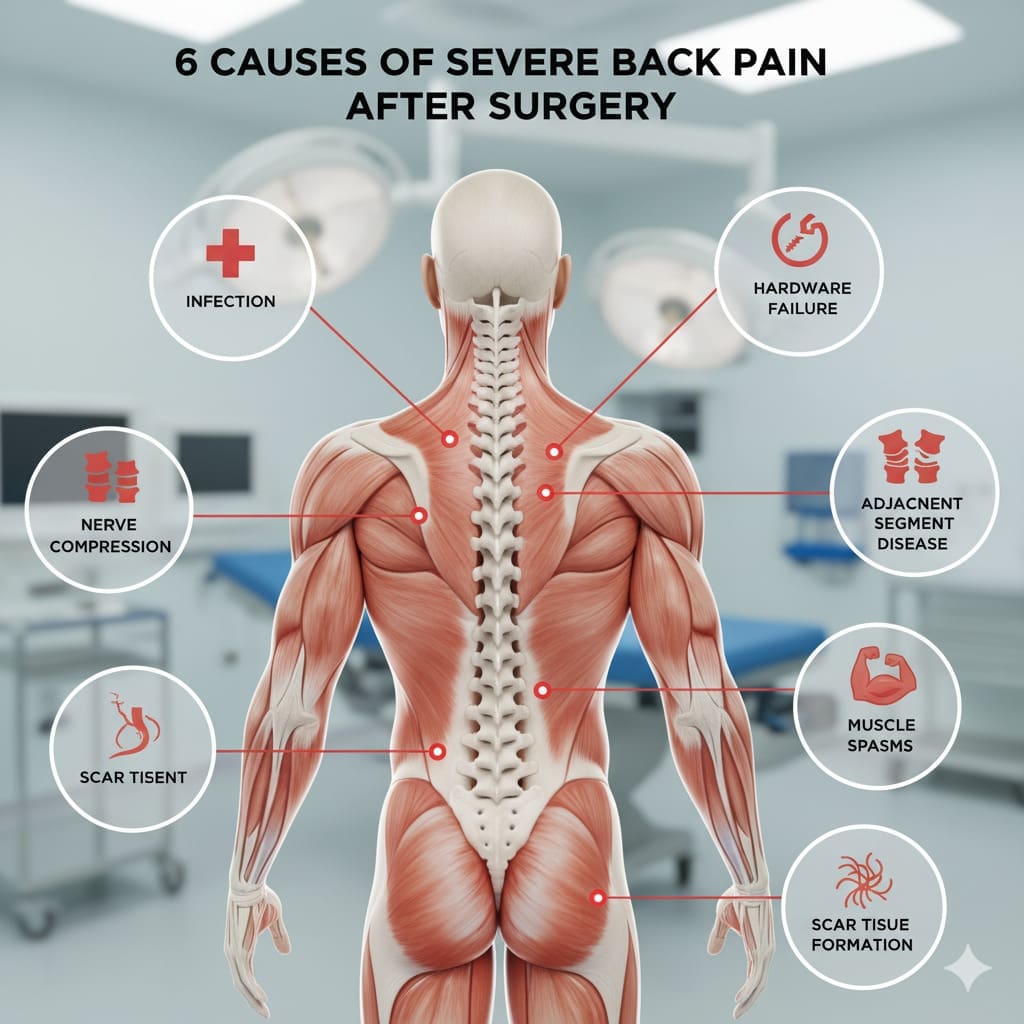
At NBR Clinic, led by the renowned consultant Dr. Riaz Ahmed, we specialize in diagnosing the root causes of spinal distress. Understanding the pathology of your pain is the first step toward lasting recovery. Below, we explore the six most serious causes of back pain and how modern medicine can help you regain your quality of life.
1. Herniated or Slipped Disc: The Impact on Nerve Roots
A herniated disc (often called a slipped or ruptured disc) occurs when the soft, jelly-like center of a spinal disc pushes through a tear in the tougher exterior casing.
The Mechanism of Pain
The human spine is cushioned by intervertebral discs that act as shock absorbers. When these discs fail, they can leak inflammatory proteins or physically compress nearby spinal nerves. This leads to:
- Radiculopathy: Sharp, electric-like pain traveling down the limbs.
- Muscle Weakness: Difficulty lifting the foot or maintaining grip strength.
- Paresthesia: Tingling or “pins and needles” sensations.
Dr. Riaz Ahmed’s Insight: Early intervention is key. While many herniated discs respond well to conservative management, ignoring progressive neurological deficits can lead to permanent nerve damage.
2. Spinal Stenosis: Narrowing of the Neural Canal
Spinal stenosis refers to the abnormal narrowing of the spaces within your spine. This shrinkage puts direct pressure on the spinal cord and the nerves that travel through the spine to the arms and legs.
Symptoms and Progression
Stenosis most commonly occurs in the lower back (lumbar stenosis) and the neck (cervical stenosis). Patients often report:
- Neurogenic Claudication: Pain or cramping in the legs that worsens with standing or walking but improves when leaning forward (the “shopping cart sign”).
- Balance Issues: A feeling of instability while moving.
At NBR Clinic, we utilize advanced imaging to determine the degree of narrowing and provide tailored decompression strategies.
- Sciatica: When Nerve Compression Radiates
Sciatica is not a diagnosis in itself but a symptom of an underlying condition affecting the sciatic nerve—the longest nerve in the human body.
Identifying Sciatic Pain
When the sciatic nerve is compressed—usually by a herniated disc or a bone spur—pain radiates from the lower back, through the hips and buttocks, and down each leg.
- NLP Context: Sciatica is often associated with lumbar radiculitis.
- LSI Keywords: Piriformis syndrome, nerve root impingement, lower extremity numbness.
Treatment at NBR Clinic focuses on relieving the pressure on the nerve through a combination of physical therapy, anti-inflammatory protocols, and targeted injections.
- Degenerative Disc Disease (DDD)
Despite its name, Degenerative Disc Disease is not a “disease” in the traditional sense, but rather a condition where the spinal discs wear down due to age, injury, or repetitive stress.
The Breakdown of Spinal Integrity
As discs lose water content and elasticity, they become thinner. This reduces the space between vertebrae, leading to:
- Micro-instability: Excess motion in the spinal segment.
- Inflammatory Pain: The proteins within the disc space can irritate surrounding nerves.
- Bone Spurs: The body creates extra bone (osteophytes) to compensate for the lost disc height.
- Spondylolisthesis: Vertebral Displacement
Spondylolisthesis occurs when one vertebra slips forward over the one below it. This misalignment can be caused by a stress fracture (spondylolysis) or degenerative changes.
Grades of Slippage
Dr. Riaz Ahmed categorizes spondylolisthesis by the severity of the slip. High-grade slips can severely compromise the spinal canal, leading to intense localized back pain and significant leg pain.
- Clinical Significance: Proper bracing and core stabilization exercises are vital to prevent further progression.
- Osteoarthritis of the Spine
Also known as Spondylosis, spinal osteoarthritis is the breakdown of the cartilage in the facet joints (the joints that connect the vertebrae).
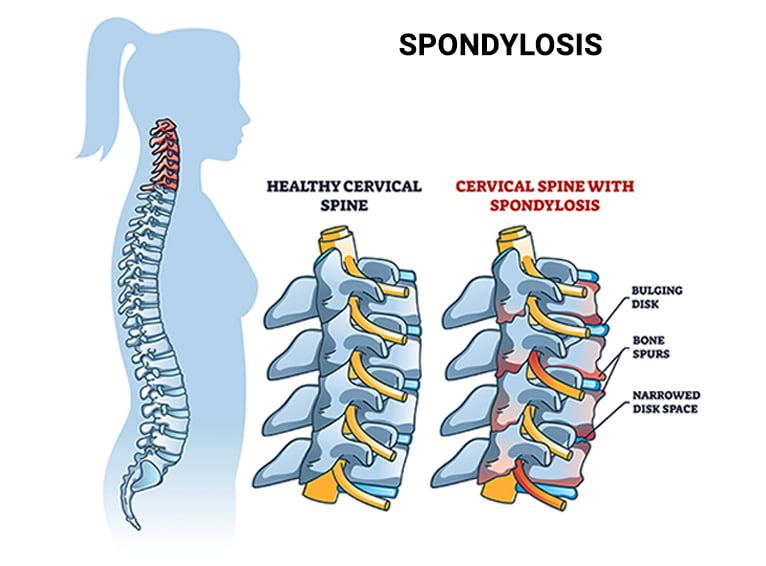
Cervical spondylosis is a degenerative spine condition that can cause neck pain, stiffness, nerve compression, and reduced mobility. Early diagnosis and proper rehabilitation can prevent worsening symptoms.
The Cycle of Stiffness
When the cartilage thins, the bones rub together, causing friction, inflammation, and pain. This is typically worse in the morning or after periods of inactivity. Over time, the body’s attempt to heal these joints results in bone spurs that may eventually lead to spinal stenosis.
Why Choose NBR Clinic and Dr. Riaz Ahmed?
Navigating spinal health requires a balance of clinical expertise and a patient-centric approach. Dr. Riaz Ahmed brings years of specialized experience to NBR Clinic, ensuring that every patient receives a diagnosis based on the latest medical evidence.
Our Diagnostic Process
- Comprehensive History: Understanding the “story” of your pain.
- Physical Examination: Testing reflexes, muscle strength, and sensory responses.
- Advanced Imaging: Utilizing MRI, CT scans, and X-rays to visualize structural anomalies.
Integrated Treatment Philosophy
We believe in a “conservative first” approach. Our treatment plans often include:
- Targeted Physical Therapy: Strengthening the “inner corset” of the spine.
- Pain Management Interventions: Epidural steroid injections or facet joint blocks.
- Minimally Invasive Procedures: For cases where conservative care is insufficient.
Frequently Asked Questions (FAQ)
Q: When should I be worried about my back pain? A: Seek immediate consultation if you experience “Red Flag” symptoms, such as loss of bladder/bowel control, sudden weakness in the legs, or pain following a significant trauma.
Q: Can these conditions be treated without surgery? A: Yes. Under the guidance of Dr. Riaz Ahmed at NBR Clinic, the vast majority of patients find relief through non-surgical interventions, including regenerative medicine and specialized physiotherapy.
Q: How does age affect these conditions? A: Conditions like DDD and Osteoarthritis are wear-and-tear issues that become more common with age, but proactive lifestyle changes can significantly slow their progression.
Conclusion: Take the First Step Toward a Pain-Free Life
Back pain is a signal from your body that something is wrong. Whether it is a herniated disc or the early stages of spinal stenosis, early diagnosis is the most effective way to avoid chronic disability.
Don’t let spinal issues dictate your lifestyle. Trust the expertise of Dr. Riaz Ahmed at NBR Clinic to provide the clarity and care you deserve.
Contact NBR Clinic today to schedule your consultation and begin your journey toward spinal wellness.
Experiencing numbness, weakness, or radiating leg pain? These are signs of nerve compression that require immediate attention. Ensure your long-term health by scheduling a priority visit with Dr. Riaz Ahmed at NBR Clinic.