Risk Factors for Sports Injuries
Sports injuries rarely happen “out of nowhere.” In most cases, the body gives warning signs—tightness, fatigue, poor control, or repeated soreness—before a bigger injury shows up. Understanding risk factors for sports injuries helps athletes, gym-goers, and active people make smarter training decisions and reduce time lost from sport.
At NBR Clinic, athletes often ask why they keep getting the same problem again and again—ankle sprains, hamstring strains, knee pain, shoulder issues, or lower back pain. Usually, it is not just bad luck. It is a mix of training errors, movement problems, and incomplete recovery. In this guide, you will learn the causes of sports injuries, the common risk factors in sports injuries, and the most practical ways to reduce your risk with prevention and proper rehabilitation.
What are the main risk factors for sports injuries?
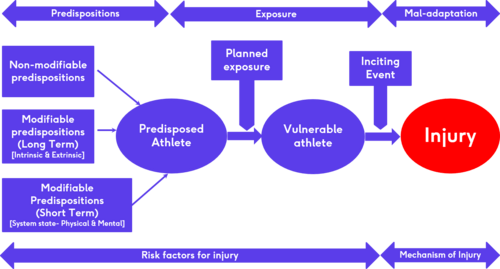
The main sports injury risk factors in athletes include poor preparation, excessive training load, fatigue, weak conditioning, faulty movement patterns, incorrect technique, footwear issues, and previous injuries that never fully recovered. Many injuries happen when multiple factors stack up—like overtraining plus poor biomechanics plus inadequate warm-up before exercise.
To keep it simple: when your body is under-prepared and over-stressed, injury risk rises.
Risk factors for sports injuries linked to warm-up, flexibility, and mobility
One of the most overlooked factors that increase sports injury risk is a rushed start to training. Inadequate warm-up before exercise can reduce muscle readiness and joint control, especially for sprinting, jumping, sudden direction changes, and heavy lifting.
At the same time, poor flexibility and mobility may limit normal movement range. When mobility is restricted, the body “cheats” by loading the wrong joint or muscle. Over time, this can create movement pattern dysfunction and increase strain on tendons and ligaments.
How to reduce sports injury risk (quick wins):
-
Warm up with light cardio + dynamic drills before intensity.
-
Add mobility for hips, ankles, thoracic spine, and shoulders.
-
Use sport-specific preparation (for example, landing and cutting drills for field sports).
Risk factors for sports injuries caused by overtraining and poor load management
Many athletes train hard, but not many manage recovery well. Overtraining syndrome is not just “tiredness”—it is a long-term imbalance between training stress and recovery. When training load management is poor, the body cannot adapt, and tissues become more vulnerable.
A key driver here is fatigue and injury risk. Fatigue reduces coordination, slows reaction time, and increases mistakes in technique. That is why injuries often happen late in a match, at the end of a tough set, or during the final reps of a workout.
Sports injury prevention risk factors to watch for:
-
Sudden spikes in intensity or volume (too much, too soon)
-
Training through pain
-
No deload weeks
-
Poor sleep and high stress
-
Back-to-back hard sessions without recovery
Rest and recovery for athletes is not a luxury—it is part of performance. Improper recovery after workouts can quietly build the perfect environment for injury.
Risk factors for sports injuries from muscle imbalance and weak conditioning

Another major category of sports injury causes and prevention is strength imbalance. Muscle imbalance in athletes often develops when one muscle group dominates and the opposing group stays weak. For example:
-
Strong quadriceps with weak hamstrings can raise hamstring strain risk.
-
Strong chest with weak upper back can contribute to shoulder problems.
-
Weak glutes can overload knees and lower back.
Weak conditioning and injury also go together. When the body lacks base strength, endurance, and control, even normal training loads can become risky.
Injury prevention strategies for athletes:
-
Strength training that targets weak links (glutes, hamstrings, calves, core, scapular stabilizers)
-
Single-leg control drills
-
Eccentric strengthening (important for tendons and hamstrings)
-
Balanced programming, not just “favorite exercises”
Risk factors for sports injuries related to biomechanics and technique
Even strong athletes can get injured if movement quality is poor. Poor biomechanics in sports means the body is not aligning and absorbing force efficiently. This can show up as knee collapse during landing, poor trunk control, limited ankle motion, or shoulder impingement positions.
Add incorrect technique in sports or poor form during training, and the risk rises fast—especially with heavy lifts, repeated jumps, or high-speed drills. Small errors repeated hundreds of times can become a major injury trigger.
If you feel like you keep getting the same pain during the same movement, that is often a sign of movement pattern dysfunction rather than a “weak body.”
At NBR Clinic, movement assessment can identify the real driver, and treatment focuses on correction—not just temporary pain relief.
Footwear and equipment: risk factors for sports injuries you can fix quickly
Sometimes the simplest issues cause big problems. Footwear-related injuries are common when shoes do not match the sport, surface, or foot mechanics. Improper footwear for running/sports can contribute to shin pain, knee pain, ankle strain, plantar fascia irritation, and overuse injuries.
Also, skipping safety gear increases risk in contact or high-speed sports. Protective equipment for athletes (mouthguards, ankle braces when needed, proper pads, supportive footwear) can reduce impact damage and limit risky joint positions.
A quick check:
-
Are your shoes worn out?
-
Are they made for your sport and surface?
-
Do you need sport-specific support or stability?
Previous injury: the strongest predictor of future injury
If you want to know why athletes get injured again and again, look at history. A previous injury risk recurrence is one of the strongest risk factors for sports injuries. Many athletes return too early, stop rehab once pain reduces, or never restore full strength and control.
Lack of rehabilitation after injury may leave:
-
Weak muscles around the injured joint
-
Reduced balance and coordination
-
Poor confidence and movement hesitation
-
Unfixed biomechanical issues that caused the first injury
That is why return-to-play guidelines matter. The goal is not “I can train again.” The goal is “I can perform safely at full intensity.”
At NBR Clinic, rehab plans are designed around objective progress—strength, control, mobility, sport demands—so return-to-play becomes safer and more reliable.
How to reduce sports injury risk: a practical prevention plan
If you want real sports injury causes and prevention steps that work, focus on the basics and stay consistent:
-
Warm-up correctly
Use dynamic prep, activation, and sport-specific drills to reduce risk. -
Manage training load
Track weekly volume and intensity. Avoid sudden spikes. Plan recovery. -
Prioritize recovery
Sleep, hydration, nutrition, and scheduled rest are essential for tissue repair. -
Build balanced strength
Fix muscle imbalance, develop core control, and strengthen key stabilizers. -
Improve technique and movement quality
Coaching, video feedback, and movement screening can prevent repeated mistakes. -
Treat injuries fully, not halfway
Complete rehab, follow return-to-play guidelines, and address root causes.
If you are already dealing with pain, do not guess. A structured assessment can quickly identify the main sports injury prevention risk factors in your case.
When to see a sports medicine specialist
You should consult a professional if:
-
Pain keeps returning with training
-
You feel unstable, weak, or “off” after an injury
-
You cannot progress without flare-ups
-
You suspect tendon, ligament, or stress-related injuries
-
You need a safe return-to-sport plan
At NBR Clinic, Dr. Riaz Ahmed (Sports Medicine Specialist in Lahore) supports athletes with assessment, targeted rehabilitation, manual therapy when appropriate, and training guidance to reduce recurrence—so you can perform with confidence.
Conclusion
Understanding risk factors for sports injuries is the fastest way to protect your performance and avoid long breaks from training. Most injuries come from predictable patterns: inadequate warm-up, poor flexibility, overtraining, fatigue, weak conditioning, poor biomechanics, incorrect technique, footwear mistakes, and incomplete rehab after a previous injury. The good news is that these factors that increase sports injury risk are manageable when you follow smart training, structured recovery, and proper rehabilitation.
If you want a personalized plan to reduce injury risk and return to sport safely, NBR Clinic can help you identify your exact risk factors and build a prevention strategy that fits your sport and body.