What Is the Main Purpose of Therapeutic Modalities?
In the world of physical rehabilitation, practitioners use a variety of tools to help patients recover from injuries. If you have ever visited a sports medicine clinic, you likely saw machines like ultrasound or electrical stimulators. You might wonder, “What is the main purpose of therapeutic modalities?”
At NBR Clinic, we believe that understanding your treatment is the first step toward recovery. Under the expert guidance of Dr. Riaz Ahmed, recognized as the Best Sports Medicine Specialist in Lahore, our clinic integrates advanced technology with manual therapy. These “physical agents” are not just accessories to exercise; they are vital components of a comprehensive rehabilitation protocol.
This article explores the main purpose of therapeutic modalities, the science behind their use, and how they contribute to faster, more effective patient outcomes.
Defining the Main Purpose of Therapeutic Modalities
The main purpose of therapeutic modalities is to create an optimal environment for the body to heal itself. While exercise and stretching focus on long-term strength and flexibility, modalities target the immediate physiological barriers to movement, such as acute pain and inflammation.
By utilizing physical agents, therapists can influence the body’s physiological response. This includes controlling the inflammatory process and facilitating neuromuscular re-education. Essentially, modalities “bridge the gap” between an acute injury and the ability to perform active rehabilitation exercises.
Categories of Therapeutic Modalities
To understand the main purpose of therapeutic modalities, we must categorize them based on how they interact with human tissue. Therapists generally group them into thermal, mechanical, and electrical agents.
1. Thermal Agents: Thermotherapy and Cryotherapy
Thermal agents use temperature changes to induce a specific response. Cryotherapy (cold therapy) is essential for edema reduction and managing acute inflammation. Conversely, thermotherapy (heat therapy) promotes vasodilation, which increases blood flow to the area. This increased circulation delivers oxygen and nutrients necessary for tissue repair while improving collagen extensibility.
2. Electrotherapy: TENS and Beyond
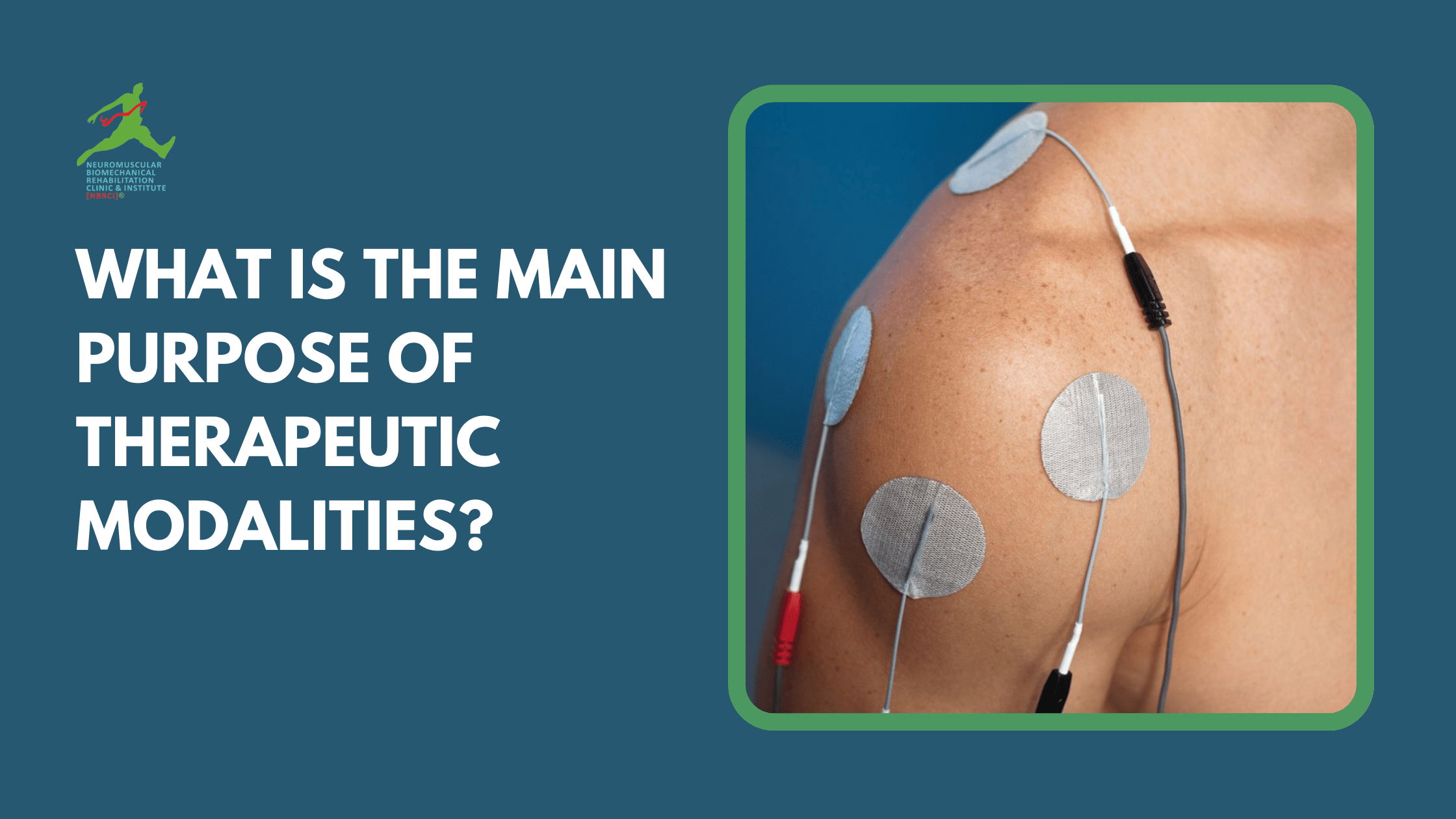
TENS (Transcutaneous Electrical Nerve Stimulation) is perhaps the most well-known form of electrotherapy. The primary goal here is pain modulation. By stimulating sensory nerves, TENS utilizes the gate control theory to “block” pain signals before they reach the brain.
3. Mechanical Modalities and Ultrasound
Therapeutic Ultrasound uses sound waves to create deep heating or non-thermal cellular changes. Its purpose is often soft tissue mobilization and scar tissue breakdown. Other mechanical tools include traction or compression, which help with joint spacing and fluid drainage.
Key Clinical Goals of Modality Use
Beyond just “feeling better,” the main purpose of therapeutic modalities involves meeting specific clinical milestones. At NBR Clinic, we prioritize these outcomes to ensure a return to peak performance.
Pain Modulation and the Gate Control Theory
Managing pain is usually the first priority. Chronic or acute pain prevents a patient from participating in physical therapy. Modalities like Laser Therapy (LLLT) and TENS offer a drug-free pain relief alternative. By altering nerve conduction, these tools provide a window of comfort where the patient can begin moving.
Edema Reduction and Increased Circulation
Swelling (edema) can limit the range of motion (ROM) and cause secondary tissue damage. Through the strategic use of cryotherapy and certain types of electrotherapy, we can move fluid away from the injured site. This process speeds up the healing timeline significantly.
Muscle Atrophy Prevention and Recruitment
Following surgery or severe injury, muscles often “shut down.” Neuromuscular re-education via electrical stimulation helps with muscle recruitment. This is vital for muscle atrophy prevention, ensuring that the muscle remains viable and active even when the patient cannot perform heavy lifting.
Comparing Common Modalities
| Modality Type | Common Tool | Primary Purpose | Best For |
| Electrical | TENS | Pain modulation | Chronic back pain, post-op pain |
| Sound | Therapeutic Ultrasound | Collagen extensibility | Tendonitis, ligament sprains |
| Light | Laser Therapy (LLLT) | Physiological response | Cellular repair, inflammation |
| Cold | Cryotherapy | Edema reduction | Acute sports injuries, swelling |
Advanced Modalities for Specialized Care
As technology evolves, so does the main purpose of therapeutic modalities. At NBR Clinic, we utilize specialized tools to address complex cases.
-
Iontophoresis: This involves using a mild electrical current to deliver medication through the skin. It is highly effective for localized inflammation like plantar fasciitis.
-
Biofeedback: This tool helps patients regain control over bodily functions. It provides real-time data on muscle recruitment, allowing the patient to see exactly how their body responds to specific movements.
-
Laser Therapy (LLLT): This promotes “photobiomodulation,” which stimulates the mitochondria in cells to produce more energy (ATP), accelerating the repair of damaged tissues.
Integrating Modalities into a Rehabilitation Protocol
It is important to remember that the main purpose of therapeutic modalities is to support, not replace, active therapy. A standalone machine will rarely solve a structural problem. However, when integrated into a rehabilitation protocol designed by a specialist like Dr. Riaz Ahmed, they become powerful catalysts for change.
For example, a session might begin with Therapeutic Ultrasound to increase collagen extensibility in a stiff shoulder. This is followed by manual soft tissue mobilization and finished with TENS to manage any post-treatment soreness. This multi-layered approach ensures the patient makes progress during every visit.
Why Quality Matters
Using high-grade physical agents ensures safety and efficacy. Inexpensive, home-grade devices often lack the precision required for deep tissue healing. Professional-grade equipment allows for specific frequency tuning to target either superficial or deep structures accurately.
Patient Outcomes: What to Expect
When the main purpose of therapeutic modalities is achieved, patients notice several key improvements:
-
Improved Range of Motion (ROM): Reduced pain and stiffness allow for smoother joint movement.
-
Enhanced Mobility: Patients can return to daily activities or sports faster.
-
Better Sleep: Reduction in nighttime pain leads to better systemic recovery.
-
Faster Healing: By optimizing the physiological response, the body repairs itself more efficiently.
Conclusion: The Strategic Value of Modalities
In summary, the main purpose of therapeutic modalities is to manage pain, reduce inflammation, and prepare the body for the hard work of active recovery. Whether it is through TENS, cryotherapy, or neuromuscular re-education, these tools are essential for any modern clinical setting.
At NBR Clinic, we are dedicated to providing the highest standard of care. By combining the expertise of the Best Sports Medicine Specialist in Lahore, Dr. Riaz Ahmed, with cutting-edge electrotherapy and mechanical modalities, we help our patients achieve results that last.
If you are struggling with a persistent injury, don’t just wait for it to go away. Experience the benefits of a professionally managed rehabilitation protocol tailored to your needs.
Frequently Asked Questions (People Also Ask)
What is the most common therapeutic modality?
The most common tools used are TENS for pain and Therapeutic Ultrasound for tissue healing. Most clinics also use cryotherapy and thermotherapy daily.
Are therapeutic modalities safe?
Yes, when administered by trained professionals. Therapists check for contraindications like pacemakers or pregnancy before using electrotherapy or laser therapy.
Do modalities replace exercise?
No. The main purpose of therapeutic modalities is to facilitate exercise. Active movement is still required to build long-term strength and stability.
Would you like me to create a personalized recovery plan using these modalities, or would you prefer a list of specific exercises for your condition?