How Does Sciatica Work? A Comprehensive Guide to Nerve Pain & Recovery
Living with a sharp, shooting pain that radiates from your lower back down to your toes can be more than just “uncomfortable”—it can be debilitating. If you’ve ever felt an electric shock sensation when you sneeze or a constant ache in your glutes, you are likely dealing with sciatica.
At NBR Clinic, led by our expert consultant Dr. Riaz Ahmed, we specialize in diagnosing the root cause of nerve compression and helping patients return to a pain-free life. In this guide, we will break down the anatomy of the sciatic nerve, how it becomes damaged, and what you can do to fix it.
What Exactly is the Sciatic Nerve?
To understand how sciatica works, you first have to understand the anatomy of the sciatic nerve. It is not just a single “string”; it is a complex bundle of nerve fibers.
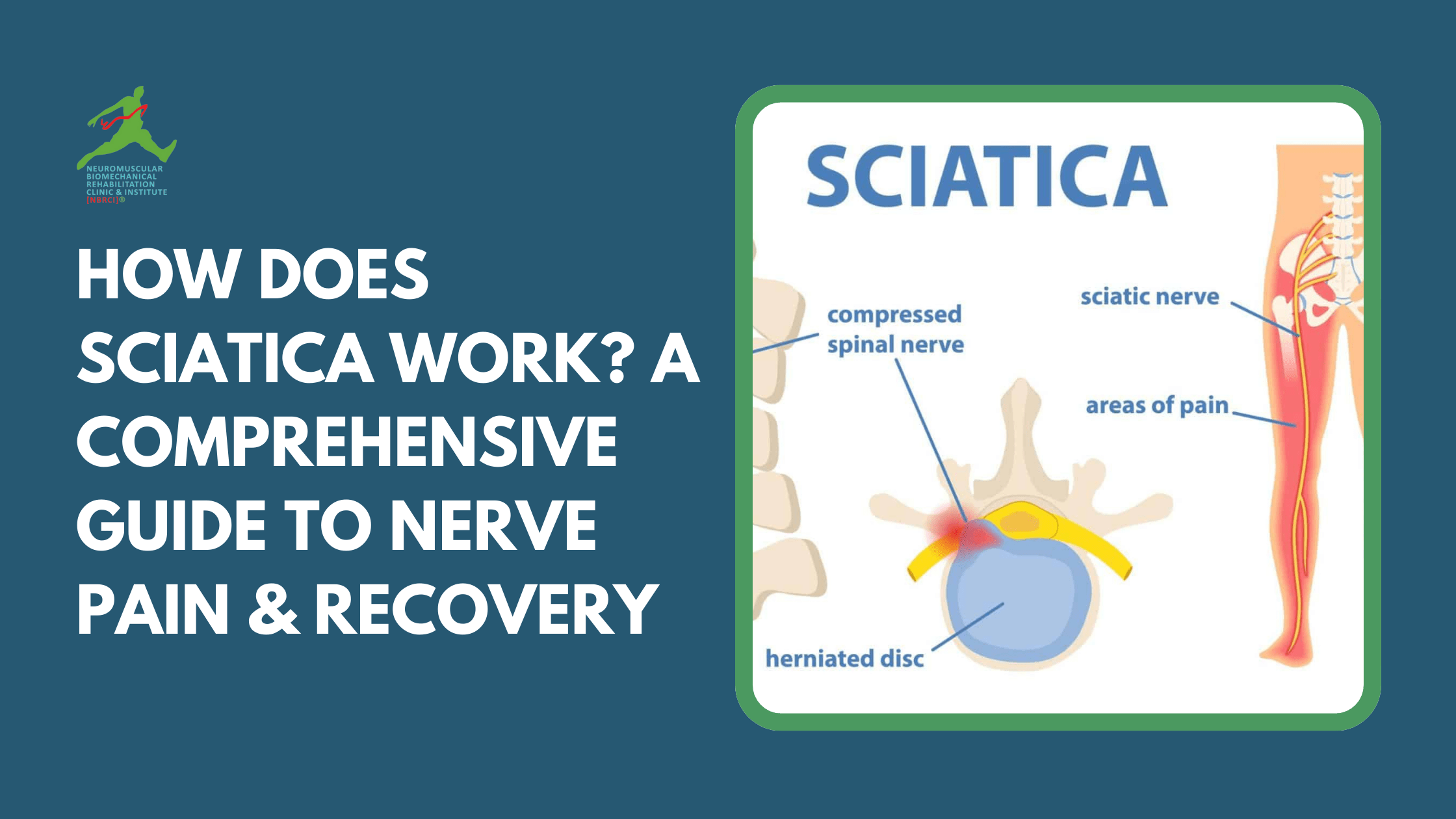
The sciatic nerve is the longest and thickest nerve in the human body. It originates in the lumbar spine (lower back), specifically from the L4 through S3 nerve roots. From there, it travels through a remarkable path:
- The Lower Back (Lumbar Spine): Where the nerve roots exit the spinal column.
- The Hips & Pelvis: The nerve passes deep within the hip.
- The Buttocks (Gluteal Region): It runs underneath or through the piriformis muscle.
- The Legs: It travels down the back of each thigh.
- The Feet: Just above the knee, it branches into smaller nerves that provide sensation and motor function to the calves, ankles, and toes.
When this nerve is healthy, it allows you to walk, run, and stand. When it is compressed or irritated, the result is the condition we call sciatica.
How Does Sciatica Happen? (The Mechanism of Injury)
Sciatica is not a medical diagnosis in itself; rather, it is a symptom of an underlying issue. Think of the sciatic nerve like a garden hose. If someone steps on that hose, the water flow stops. In your body, if a structure “steps” on the nerve, the electrical signals become distorted, leading to pain, numbness, or weakness.
1. Lumbar Herniated Discs
This is the most common cause Dr. Riaz Ahmed sees at NBR Clinic. Your spinal discs act as shock absorbers. If the soft inner gel of a disc leaks out (herniates), it can press directly against the sciatic nerve roots.
2. Spinal Stenosis
As we age, the spinal canal can begin to narrow. This narrowing (stenosis) puts pressure on the nerves. This is often related to “wear and tear” or osteoarthritis.
3. Piriformis Syndrome
In some people, the sciatic nerve runs directly through the piriformis muscle in the buttock. If this muscle spasms or tightens due to sitting too long or an injury, it can “strangle” the nerve.
4. Spondylolisthesis
This occurs when one vertebra slips forward over another, pinching the nerve exit point.
Identifying the Symptoms: Is it Sciatica?
Many people mistake general muscle strain for sciatica. However, true sciatic nerve pain has very specific characteristics. Dr. Riaz Ahmed recommends looking for the following:
- Unilateral Pain: Sciatica almost always affects only one side of the body.
- The “Electric” Sensation: The pain is often described as a sharp, searing, or jolt-like feeling rather than a dull muscle ache.
- Radiculopathy: This is the medical term for pain that “radiates.” The pain travels from the back, through the “butt cheeks,” and down the leg.
- Numbness and Tingling: You might feel “pins and needles” in your foot or calf.
- Muscle Weakness: In severe cases, you may find it difficult to lift your foot (foot drop) or push off while walking.
The Path to Diagnosis at NBR Clinic
When you visit NBR Clinic, Dr. Riaz Ahmed performs a thorough clinical evaluation to determine the exact site of nerve impingement.
- Physical Examination: We check your muscle strength and reflexes. A common test is the “Straight Leg Raise,” which helps identify if a disc is pressing on the nerve.
- Imaging (MRI/CT Scans): To see the soft tissues, discs, and nerves in high definition.
- X-rays: To look for spinal alignment issues or bone spurs.
Non-Surgical Treatment Options
The good news? The majority of sciatica cases (about 80–90%) resolve without surgery. At NBR Clinic, we focus on a multimodal approach to healing.
Specialized Physical Therapy
Motion is medicine. Specific stretching and strengthening exercises can help decompress the nerve and strengthen the core muscles that support your spine.
Spinal Adjustments and Mobilization
Dr. Riaz Ahmed utilizes precise techniques to improve spinal alignment, reducing the mechanical pressure on the lumbar nerve roots.
Anti-Inflammatory Protocols
Reducing inflammation is key. This may involve specific lifestyle changes, nutritional support, or prescribed medications to “calm down” the irritated nerve.
Ergonomic Corrections
If you spend 8 hours a day sitting, you may be aggravating your sciatic nerve. We help you optimize your workspace and posture to prevent recurrence.
Prevention: Keeping Your Spine Healthy
To avoid a flare-up, follow these “Back-Friendly” rules:
- Maintain Core Strength: Your “inner corset” protects your spine.
- Watch Your Posture: Avoid slouching; use a chair with lower back support.
- Lift Safely: Always bend at the knees, not the waist.
- Stay Active: Walking is one of the best activities for nerve health as it promotes blood flow to the spinal structures.
Why Choose Dr. Riaz Ahmed at NBR Clinic?
Nerve pain is complex. It requires a consultant who understands the delicate balance of neurology and orthopedics. At NBR Clinic, we don’t just treat the pain; we treat the person. Dr. Riaz Ahmed takes the time to create a personalized recovery plan tailored to your lifestyle and goals.
We believe that no one should have to live with chronic leg and back pain. By utilizing evidence-based practices and compassionate care, we help you get back to the activities you love.
Frequently Asked Questions (FAQ)
Q: Can sciatica go away on its own?
A: While mild cases can resolve with rest and stretching, chronic or severe pain requires professional intervention to prevent permanent nerve damage.
Q: Is walking good for sciatica?
A: Yes, gentle walking can help reduce inflammation by increasing circulation. However, avoid long strides that may overstretch the nerve.
Q: When should I see a doctor immediately?
A: Seek immediate care if you experience sudden, severe weakness in your leg, numbness in your “saddle area,” or loss of bladder/bowel control.