5 Critical Symptoms of Sciatica Pain: When to Consult Dr. Riaz Ahmed at NBR Clinic
Sciatica pain affects millions of people worldwide, causing debilitating discomfort that radiates from the lower back down through the legs. Understanding the symptoms of sciatica is crucial for seeking timely medical intervention and preventing long-term nerve damage. At NBR Clinic, Dr. Riaz Ahmed specializes in diagnosing and treating sciatic nerve pain with personalized treatment plans designed to restore your quality of life.
Understanding Sciatica: What Is Sciatic Nerve Pain?
Sciatica refers to pain that originates along the sciatic nerve, which is the longest and widest nerve in the human body. This nerve runs from your lower back through your hips, buttocks, and down each leg. When this nerve becomes compressed, irritated, or inflamed, it results in sciatica pain that can range from mild discomfort to severe, debilitating pain.
The sciatic nerve pain typically affects only one side of the body, though in rare cases, bilateral sciatica can occur. Understanding the root causes and recognizing the symptoms of sciatica pain early can significantly improve treatment outcomes.
Common Causes of Sciatica Pain
Before diving into the symptoms, it’s important to understand what causes sciatica:
- Herniated disc or slipped disc in the lumbar spine
- Spinal stenosis (narrowing of the spinal canal)
- Degenerative disc disease affecting the lower back
- Piriformis syndrome (muscle spasm in the buttocks)
- Spondylolisthesis (vertebral slippage)
- Lumbar spine injuries or trauma
- Bone spurs on the vertebrae
- Pregnancy-related nerve compression
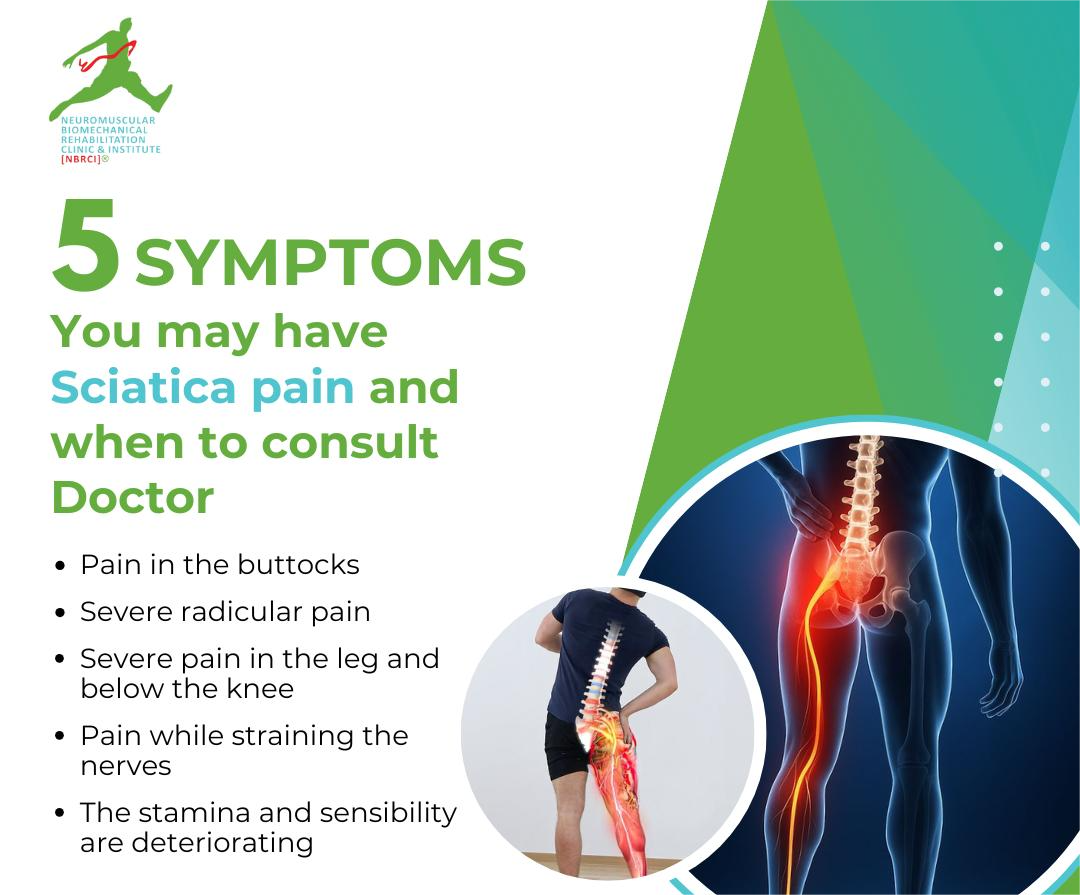
5 Major Symptoms of Sciatica Pain You Shouldn’t Ignore
1. Pain in the Buttocks and Hip Region
One of the earliest and most common signs of sciatica is persistent pain in the buttocks. This discomfort typically originates in the lower back or gluteal region and can feel like:
- Deep, aching pain in one buttock
- Sharp, burning sensation in the hip area
- Constant discomfort when sitting
- Pain radiating from the buttock down the leg
Buttock pain associated with sciatica often worsens when sitting for prolonged periods, standing up from a seated position, or during certain movements. Many patients describe this as a deep, gnawing ache that makes it difficult to find a comfortable position.
When Buttock Pain Indicates Sciatica
If your buttock pain is accompanied by tingling, numbness, or weakness that extends down your leg, it’s a strong indicator of sciatic nerve compression. Dr. Riaz Ahmed at NBR Clinic can perform comprehensive diagnostic tests including physical examination and imaging studies to identify the exact location of nerve impingement.
2. Severe Radicular Pain Radiating Down the Leg
Radicular pain is the medical term for pain that radiates along a nerve pathway. In sciatica, this severe radicular pain follows the path of the sciatic nerve from the lower back through the buttocks and down the back of the leg.
Characteristics of sciatic radicular pain include:
- Electric shock-like sensations
- Shooting pain that travels down the leg
- Pain that worsens with movement, coughing, or sneezing
- Burning or tingling sensations
- Leg pain that’s more severe than back pain
Understanding the Pain Pattern
The radiating pain typically follows a specific pathway depending on which nerve root is affected:
- L4-L5 nerve root: Pain travels down the back of the thigh, outer calf, and into the foot
- L5-S1 nerve root: Pain extends down the back of the leg to the heel and sole of the foot
Severe pain that interferes with daily activities, sleep, or mobility requires immediate evaluation by a spine specialist like Dr. Riaz Ahmed.
3. Severe Pain in the Leg Extending Below the Knee
A hallmark symptom of sciatica pain is severe leg pain that extends below the knee and often reaches the foot and toes. This distinguishes sciatica from other types of lower back pain or hip pain.
Lower leg pain characteristics include:
- Sharp pain in the calf muscle
- Aching sensation in the shin or ankle
- Pain that intensifies when standing or walking
- Relief when lying down or changing positions
- Burning pain in the foot or toes
Calf and Foot Involvement
When sciatic nerve pain reaches below the knee, it often affects the calf, ankle, and foot, causing:
- Numbness in the toes
- Weakness in the foot muscles
- Difficulty lifting the front part of the foot (foot drop)
- Tingling sensations in the lower leg
Pain below the knee is a significant indicator that the sciatic nerve is severely compressed and requires professional medical evaluation at NBR Clinic.
4. Pain While Straining or Nerve Stress
Sciatica pain characteristically worsens during activities that put strain on the nerves or increase pressure in the spinal canal. This includes:
- Coughing or sneezing
- Straining during bowel movements
- Heavy lifting
- Bending forward or twisting
- Prolonged sitting or standing
Nerve Tension Tests
Dr. Riaz Ahmed may perform specific nerve tension tests during your examination:
Straight Leg Raise Test: This diagnostic maneuver involves raising your straight leg while lying down. If this reproduces or intensifies your sciatic pain, it confirms nerve irritation.
Slump Test: This assesses neural tension by positioning your body in ways that stretch the sciatic nerve.
Why Straining Worsens Sciatica
When you cough, sneeze, or strain, there’s a sudden increase in intra-abdominal pressure and spinal pressure. This can temporarily compress an already irritated sciatic nerve, causing sharp, shooting pain that travels down the leg. This pain pattern is highly specific to sciatica and helps differentiate it from muscular lower back pain.
5. Deteriorating Stamina, Strength, and Sensibility
One of the most concerning symptoms of sciatica is the progressive loss of muscle strength, stamina, and sensory function in the affected leg. This indicates significant nerve compression that may lead to permanent damage if left untreated.
Loss of Muscle Strength and Stamina
As sciatic nerve compression continues, you may experience:
- Leg weakness that makes walking difficult
- Difficulty standing from a seated position
- Reduced stamina when walking or standing
- Muscle atrophy in the affected leg
- Inability to stand on tiptoes or heels
- Foot drop (inability to lift the front of the foot)
Sensory Changes and Numbness
Deteriorating sensibility manifests as:
- Numbness in the leg, foot, or toes
- Tingling sensations (pins and needles)
- Reduced ability to feel hot or cold
- Loss of reflexes in the affected leg
- Altered sensation when touching the skin
When Weakness Becomes an Emergency
Progressive weakness, especially when combined with bowel or bladder dysfunction, constitutes a medical emergency known as cauda equina syndrome. This requires immediate medical attention. Visit NBR Clinic immediately or seek emergency care if you experience:
- Loss of bowel or bladder control
- Severe weakness in both legs
- Numbness in the genital or anal region (saddle anesthesia)
- Sudden worsening of leg pain or weakness
When to Consult Dr. Riaz Ahmed at NBR Clinic
While mild sciatica pain may resolve with home care and rest, certain situations require professional medical evaluation and treatment.
Immediate Consultation Needed If:
- Severe pain that doesn’t improve after a week of home treatment
- Pain that progressively worsens
- Numbness or weakness in the leg
- Pain following trauma or injury
- Difficulty controlling bowel or bladder function
- Pain accompanied by fever or unexplained weight loss
- Leg weakness affecting your ability to walk
Why Choose NBR Clinic and Dr. Riaz Ahmed?
NBR Clinic offers comprehensive sciatica treatment under the expert guidance of Dr. Riaz Ahmed, a renowned spine specialist with extensive experience in managing sciatic nerve pain.
Diagnostic Services at NBR Clinic:
- Comprehensive physical examination
- Neurological assessment for nerve function
- Advanced imaging (X-rays, MRI, CT scans)
- Nerve conduction studies
- Personalized pain assessment
Treatment Options Available:
Conservative Treatments:
- Physical therapy and therapeutic exercises
- Pain management medications
- Anti-inflammatory treatments
- Epidural steroid injections
- Chiropractic care and spinal manipulation
- Massage therapy and muscle relaxation techniques
Advanced Interventions:
- Minimally invasive procedures
- Nerve blocks for pain relief
- Surgical options for severe cases (discectomy, laminectomy)
- Regenerative medicine approaches
Preventing Sciatica and Managing Chronic Pain
Lifestyle Modifications for Sciatica Relief
- Maintain proper posture while sitting and standing
- Use ergonomic furniture and workstations
- Practice core strengthening exercises
- Maintain a healthy weight to reduce spinal pressure
- Avoid prolonged sitting or standing
- Use proper lifting techniques
- Stay active with low-impact exercises
Exercises for Sciatica Relief
Dr. Riaz Ahmed often recommends specific exercises:
- Piriformis stretches for buttock pain
- Hamstring stretches to reduce nerve tension
- Core stabilization exercises
- Gentle yoga for flexibility
- Walking and swimming for overall fitness
Home Care Strategies
- Apply ice packs during acute pain episodes
- Use heat therapy for muscle relaxation
- Take over-the-counter anti-inflammatory medications
- Practice good sleep hygiene
- Use supportive pillows and mattresses
The Importance of Early Intervention
Early diagnosis and treatment of sciatica pain can prevent chronic pain, permanent nerve damage, and the need for surgery. The longer sciatic nerve compression persists, the higher the risk of:
- Permanent nerve damage
- Chronic pain syndrome
- Muscle atrophy and permanent weakness
- Loss of sensory function
- Reduced quality of life
Conclusion: Don’t Ignore Sciatica Symptoms
Sciatica pain is more than just discomfort—it’s a warning sign that your sciatic nerve is under stress. If you’re experiencing pain in the buttocks, severe radicular pain, leg pain below the knee, pain while straining, or deteriorating strength and sensation, don’t wait for symptoms to worsen.
Dr. Riaz Ahmed at NBR Clinic (https://nbrclinic.com/) provides expert diagnosis and comprehensive treatment for sciatica pain. With advanced diagnostic tools and personalized treatment plans, Dr. Ahmed helps patients find relief from sciatic nerve pain and return to their normal activities.
Schedule your consultation today and take the first step toward a pain-free life. Early intervention can make all the difference in your recovery from sciatic